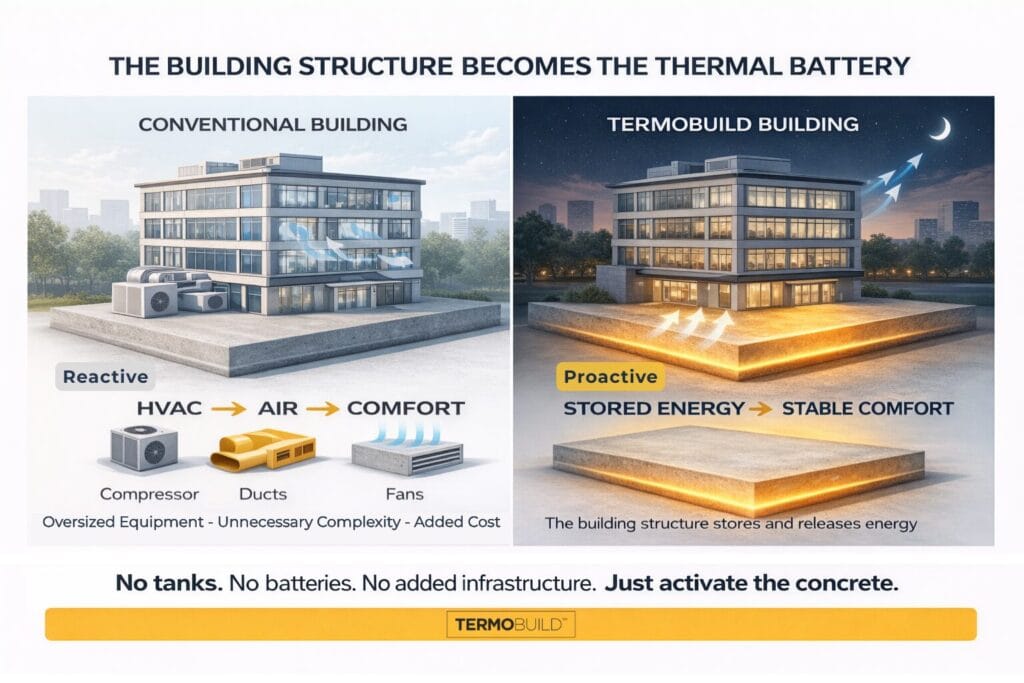
Termobuild integrates HVAC with concrete floors so the structure itself stores and releases heating and cooling energy, creating stable indoor comfort while reducing mechanical infrastructure.
Conventional buildings react to temperature swings.
HVAC systems constantly respond to changing loads, which leads to hot and cold spots and occupant complaints.
Termobuild Makes Buildings Proactive
By storing thermal energy in the structure itself, buildings maintain stable and resilient indoor comfort throughout the day.
Termobuild integrates into standard construction and mechanical systems.
No changes to your specification guide are required.
Thermal mass is passive. Termobuild actively manages thermal energy in the structure. Learn the difference →
Concrete floors can do more than support a building – they can improve it’s performance.
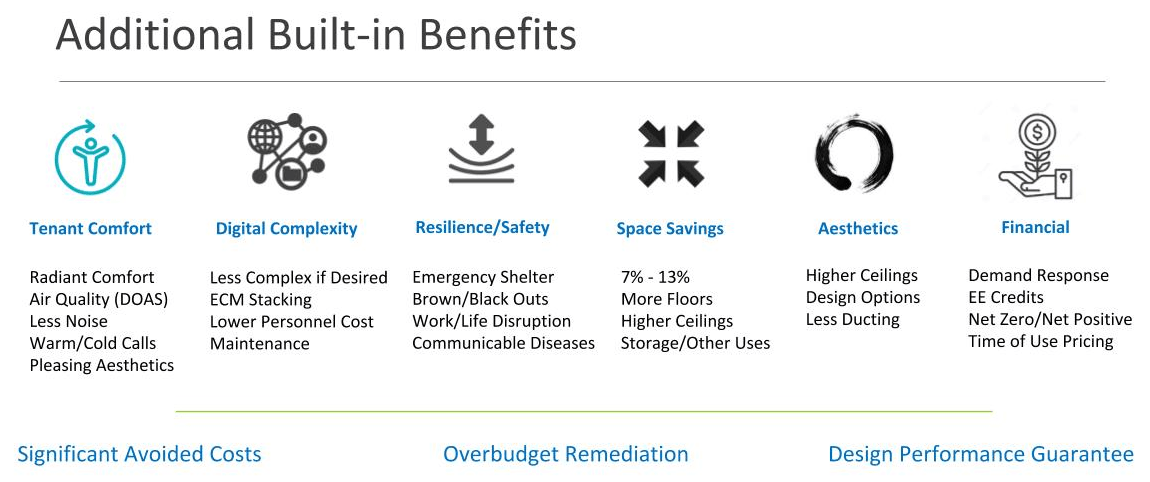
- Stable radiant comfort
- Fresh air ventilation
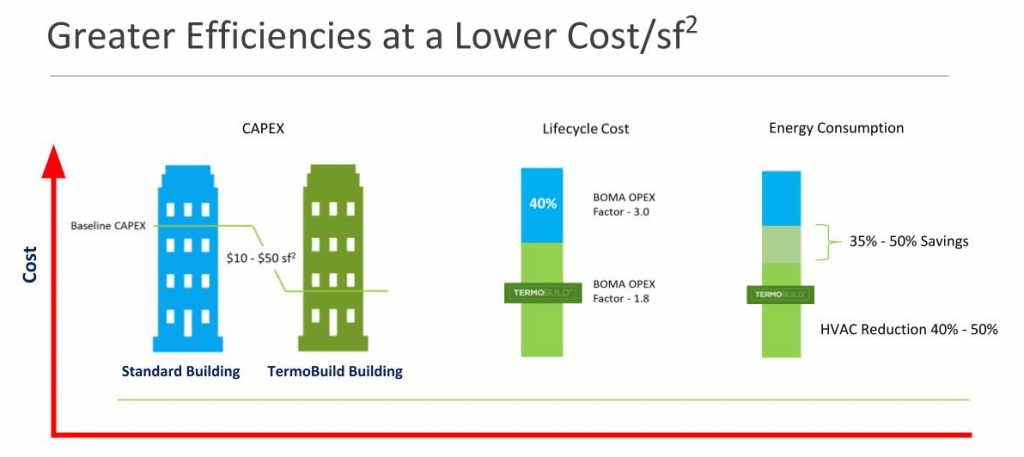
- Reduced HVAC capital cost
- Reduced peak demand
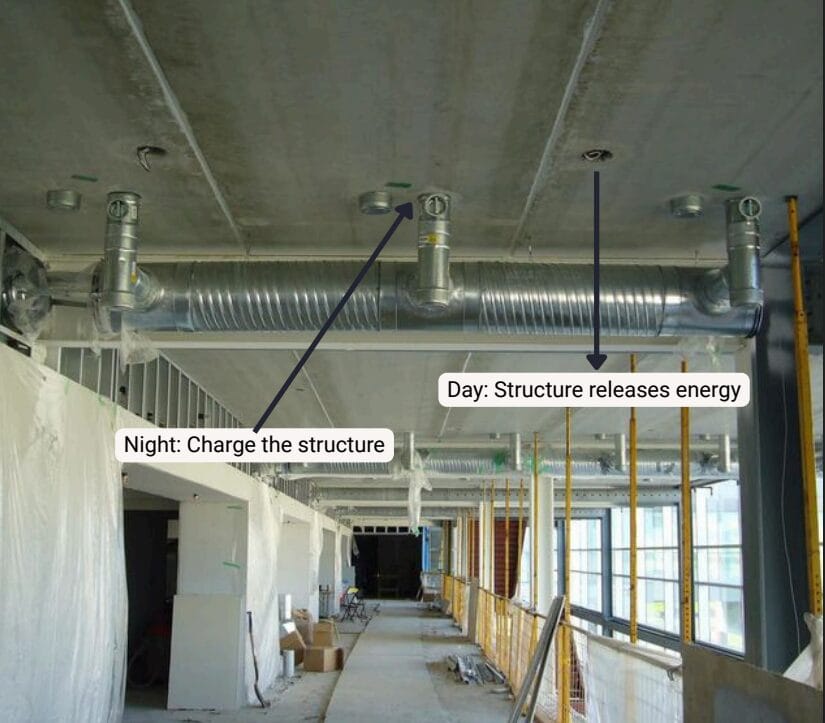
Our design integration connects cast-in-place concrete floors or hollow-core slabs with conventional HVAC systems, activating them as thermal energy storage for heating and cooling on demand.
Rechargeable Buildings shift heating and cooling loads into the structure itself — reducing daytime energy demand while maintaining stable radiant comfort across the building.
Operational energy savings of 35 – 50% in suitable building types.
Conventional HVAC vs Structural Thermal Energy Storage
Projects & Applications
Find out how structural thermal energy storage integration improves both capital efficiency and long-term energy performance.
Request a Project Cost-Benefit AnalysisWe review your building design to identify:
HVAC capital cost reductions
peak demand reduction opportunities
long-term operating savings