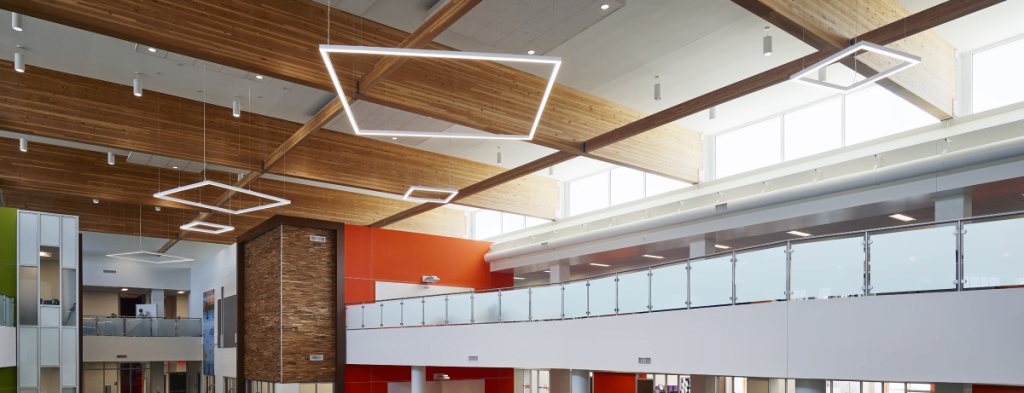
Using the Structure to Carry Thermal Load - At School Scale
Deployed across 5 schools totaling 675,000 sq ft, this project used structural thermal energy storage to reduce EUI to as low as 14 while significantly lowering reliance on conventional mechanical systems.
Most schools rely heavily on mechanical systems to maintain comfort.
That drives both capital cost and long-term energy demand. This project took a different approach. Instead of layering on more equipment, the structure itself was used to carry part of the thermal load.
What the district needed
- Lower energy use intensity across a large K–12 portfolio
- Reduced dependence on conventional heating and cooling systems
- Stable indoor comfort for students and staff
- Lower long-term operating costs without unnecessary complexity
Structural Thermal Energy Storage
Termobuild designed the system so the building structure itself became part of the air distribution and thermal strategy. Hollow core concrete panels were used as ductwork, effectively turning each building into a thermal storage center that tempered incoming air and delayed the need for mechanical heating or cooling.
Use the structure
Hollow core panels do more than support the building. They become part of the thermal and airflow system.
Store and temper energy
The concrete moderates air conditions and stores thermal energy, reducing the need for immediate mechanical response.
Reduce mechanical load
Heating and cooling demand is reduced or delayed, improving building economics while maintaining comfort.
This was not a marginal improvement.
Across five newly built schools, the customized solution produced a major reduction in EUI and significantly reduced mechanical dependency while maintaining occupant comfort.
A different way to achieve school building performance.
Instead of adding more active systems to chase thermal swings, the building itself becomes part of the solution. That changes how performance is delivered and where costs show up.
Why this matters for schools
- Lower peak loads and reduced daytime HVAC demand
- Potential capital cost reduction through less mechanical infrastructure
- More stable comfort conditions throughout the building
- Built-in resilience from energy stored in the structure itself
It’s about activating something you are already paying for.
Termobuild makes buildings proactive.
Project documentation based on completed installations; terminology updated to reflect current Termobuild positioning.
Want to see how this applies to your next project?
We can walk through where structural thermal energy storage affects cost, design, comfort, and performance based on your building type and project stage.
Best fit for:
- Universities and campuses
- K–12 schools
- Healthcare and civic buildings
- Commercial
- Luxury Residential