Buildings That Stay Comfortable — Even When Systems Fail
Termobuild turns the building structure itself into thermal energy storage, helping maintain comfort, air quality, and habitable conditions during outages, extreme weather, and HVAC disruptions.
Most Buildings Lose Comfort Fast When Mechanical Systems Stop
Conventional buildings depend heavily on active HVAC equipment to maintain comfort. When power is interrupted or a system fails, interior conditions can drift quickly, making spaces uncomfortable or unusable.
Power Outages
Extreme weather and grid disruptions can leave buildings without the active systems they rely on most.
HVAC Dependency
Conventional systems often need constant cycling to hold temperature, creating a single point of failure.
Operational Risk
When indoor comfort drops, spaces may lose usability right when they are needed most.
The Termobuild Difference
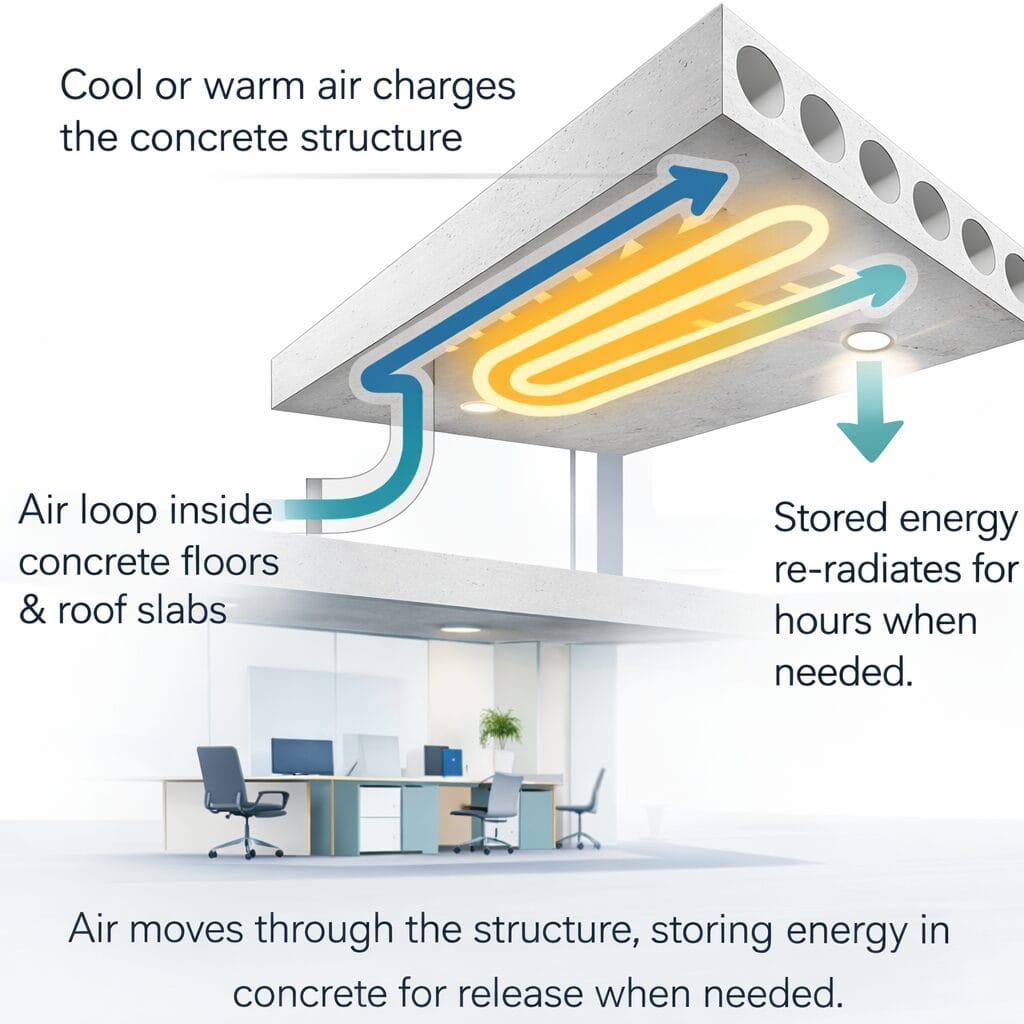
Termobuild activates the structure to store and release energy — creating a building that remains stable, reduces peak demand, and stays habitable longer.
The Building Becomes the Energy Reserve
Concrete becomes an active thermal storage medium — capturing, storing, and releasing energy over time.
Resilience Without Added Complexity
Reduce dependence on large mechanical systems while improving comfort and ventilation.
What Happens During a Disruption?
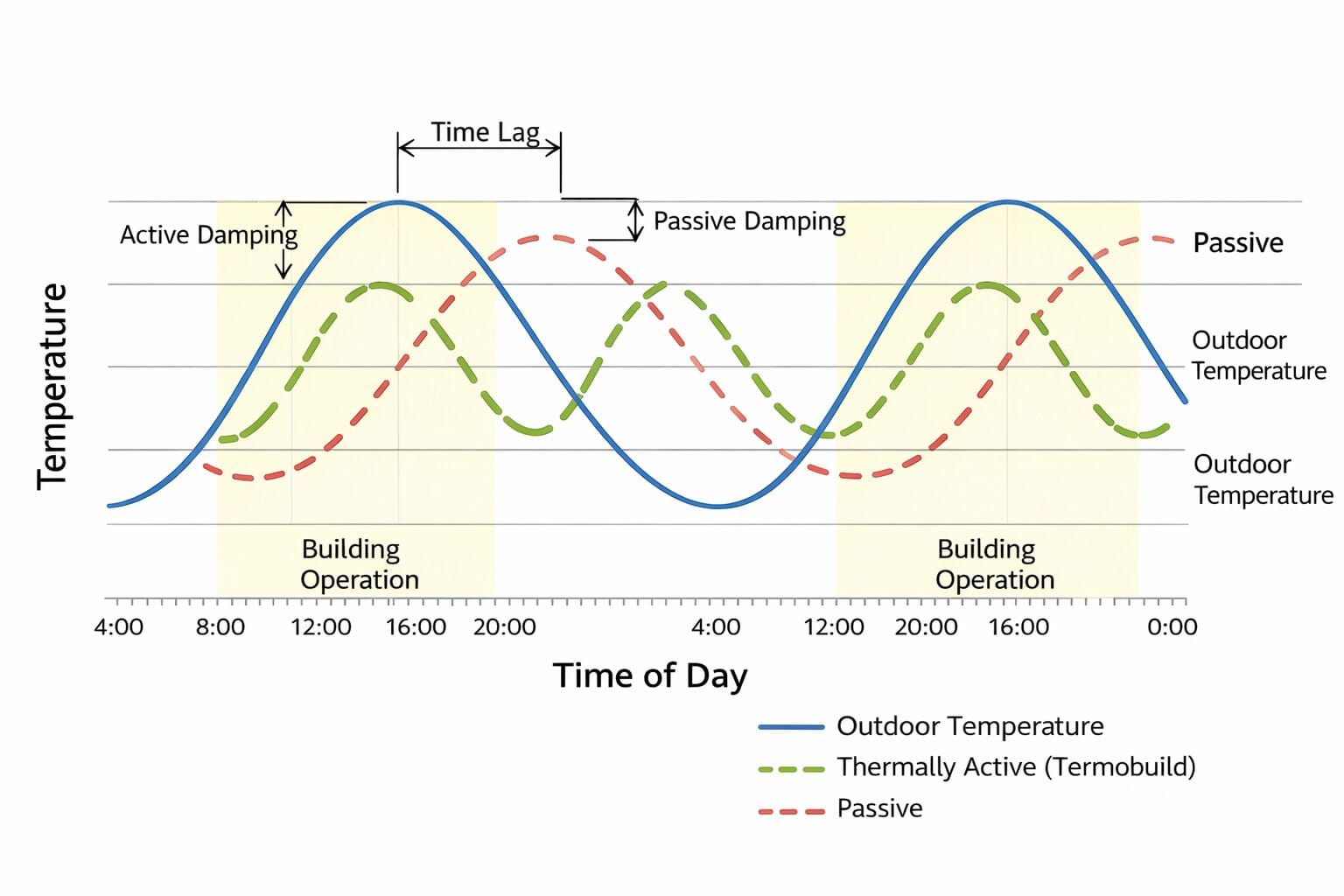
Buildings with active thermal storage maintain indoor comfort longer — even when systems are compromised.
Conventional Building
- Comfort depends on constant HVAC cycling
- Conditions shift quickly when systems stop
- Spaces become unusable faster
- High mechanical dependence
Termobuild Building
- Stored energy continues working
- Stable indoor temperatures
- Fresh air integrated into structure
- Habitable longer during outages
Real-World Proof
Documented performance shows buildings maintaining comfort during outages and system disruptions.
Sheridan College
Maintained usable temperatures even after losing heating during winter.
Mundy’s Bay Elementary School
One of the strongest energy performers with stable comfort even during variable conditions.
Why This Matters to Owners, Schools, and Institutional Projects
Resilience is no longer a “nice to have.” It affects continuity of operations, asset value, occupant safety, and long-term building performance.
Business Continuity
Buildings that remain habitable longer help protect uptime, keep spaces usable, and reduce disruption during extreme events.
Future-Ready Assets
As climate risk, grid stress, and energy costs grow, thermal resilience becomes part of long-term asset strategy.
One Strategy, Multiple Gains
The same integrated design approach that can reduce capital cost and operating cost can also strengthen resilience.
More Than Energy Savings
Termobuild is not just about lowering energy use. It is about using the structure already in the building to improve comfort, reduce mechanical burden, shift energy demand, and create a more resilient built environment.
What the Structure Can Do
- Store heating and cooling energy
- Help stabilize indoor temperatures
- Reduce daytime peak demand
- Support fresh air delivery through the building mass
- Improve habitable performance during disruptions
What This Can Replace or Reduce
- Oversized conventional mechanical dependency
- More complex active-system-only strategies
- Greater comfort volatility during system interruptions
- Lost value from treating concrete as only structure instead of a smart asset
See What Built-In Resilience Could Mean for Your Project
If you are evaluating long-term building value, energy performance, capital cost, and operational resilience, Termobuild can help you compare an integrated structural thermal storage approach against a conventional design path.