The Building Stores and Delivers Energy
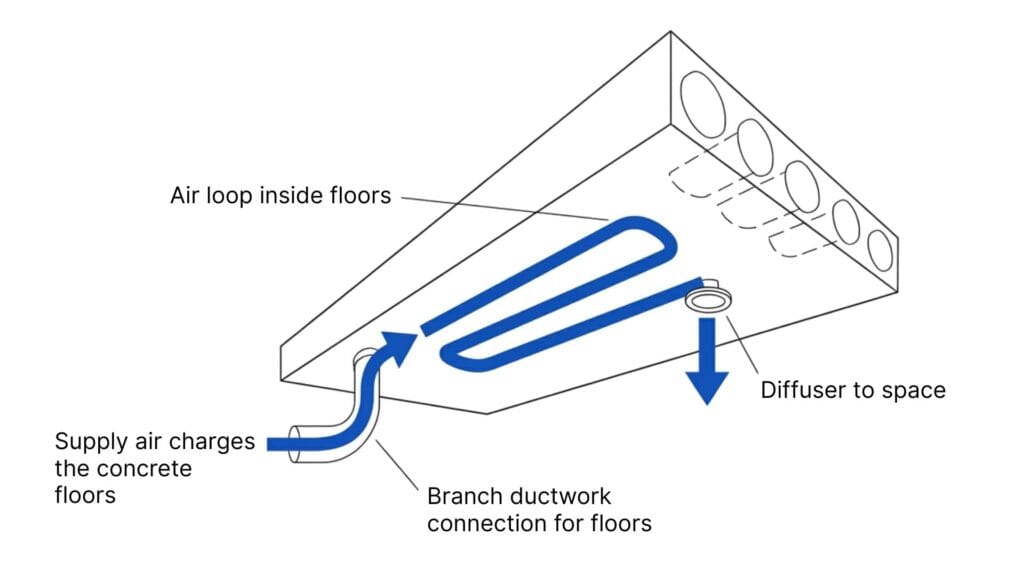
Night(Charge)
Energy is stored in the structure using off-peak power – when energy is cheaper and systems are underutilized.
Day(Release)
Stored energy reduces HVAC load during peak demand and provides stable comfort and fresh air.
Result
Lower peak demand. Smaller HVAC systems. Stable Comfort.
The structure becomes the thermal battery - reducing peak HVAC demand, system size, and total mechanical infrastructure.
Why this matters to the project
By storing energy in the structure, buildings shift heating and cooling out of peak hours - allowing systems to be designed smaller and operate more efficiently.
What Changes in the Design
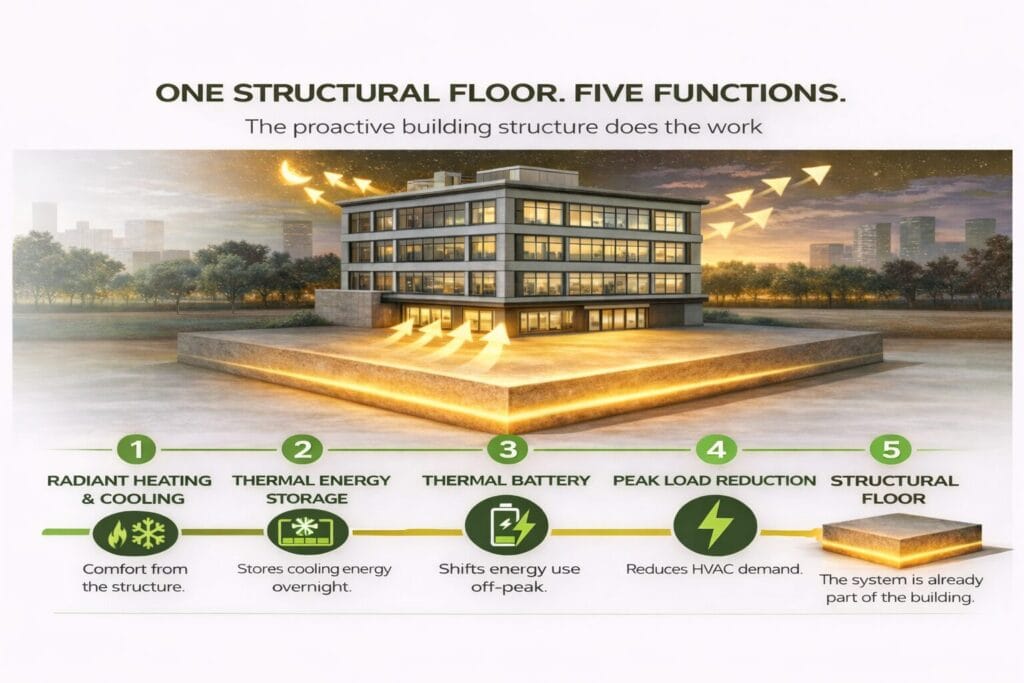
ONE STRUCTURAL FLOOR. FIVE FUNCTIONS
Replaces complexity with structure
- Stores energy in the structure (shifts load off peak)
- Delivers radiant heating & cooling (consistent comfort)
- Enables fresh air ventilation strategy
- Reduces reliance on large mechanical systems
- Simplifies overall system design
Conventional HVAC ductwork connected to standard concrete floor systems, turning them into active thermal energy storage.
Heating and cooling loads are managed through the structure itself, changing how the building handles energy rather than relying on oversized mechanical systems.
Built using standard construction methods
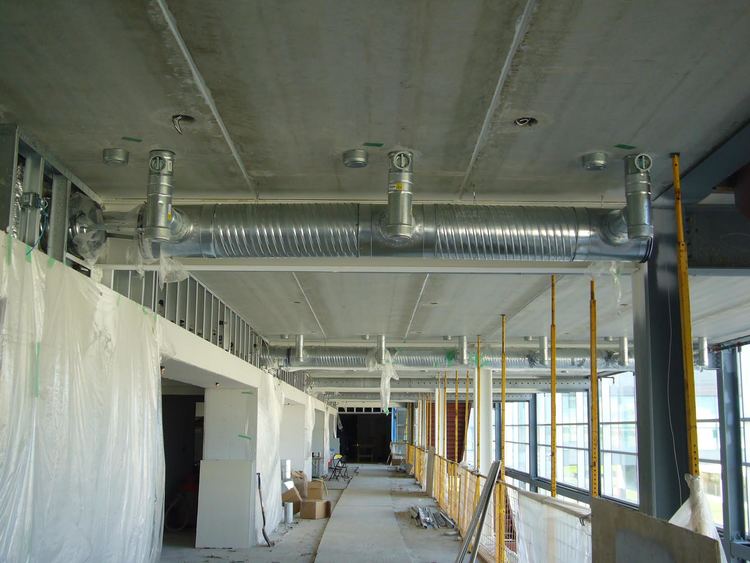
No added trades or system complexity.
What This Delivers
Capital cost impact depends on project type - ranging from cost-neutral to measurable reductions in larger buildings.
Conventional HVAC systems constantly react to changing loads - creating inefficiencies and comfort variability.
Termobuild makes the structure proactive.
Energy is stored in the structure - not chased by HVAC - delivering stable, resilient comfort throughout the day.
Termobuild integrates into standard construction and mechanical systems.
No changes to your specification standards.
Thermal mass is passive. Termobuild actively manages thermal energy in the structure. Learn the difference →
Projects & Applications
See how this impacts your project cost and mechanical system design.
Request a Project Cost-Benefit AnalysisWe review your building design to identify:
HVAC capital cost reductions
peak demand reduction opportunities
long-term operating savings
What does the Termobuild system cost?
Termobuild is not a standalone system added to a conventional design.
It replaces a portion of the mechanical system by using the structure itself to store and deliver energy.
As a result, cost is evaluated at the building system level - typically ranging from cost-neutral to a reduction in total project cost depending on building type.

Medical Building – Completed High-Performance Project