Activate the Structure You’ve Already Paid For
Reduce mechanical systems and peak demand by using the structure itself to store and deliver energy over time.
Deliver stable radiant comfort and improved ventilation throughout the building - with less mechanical infrastructure.
Analyze a ProjectSee How It Works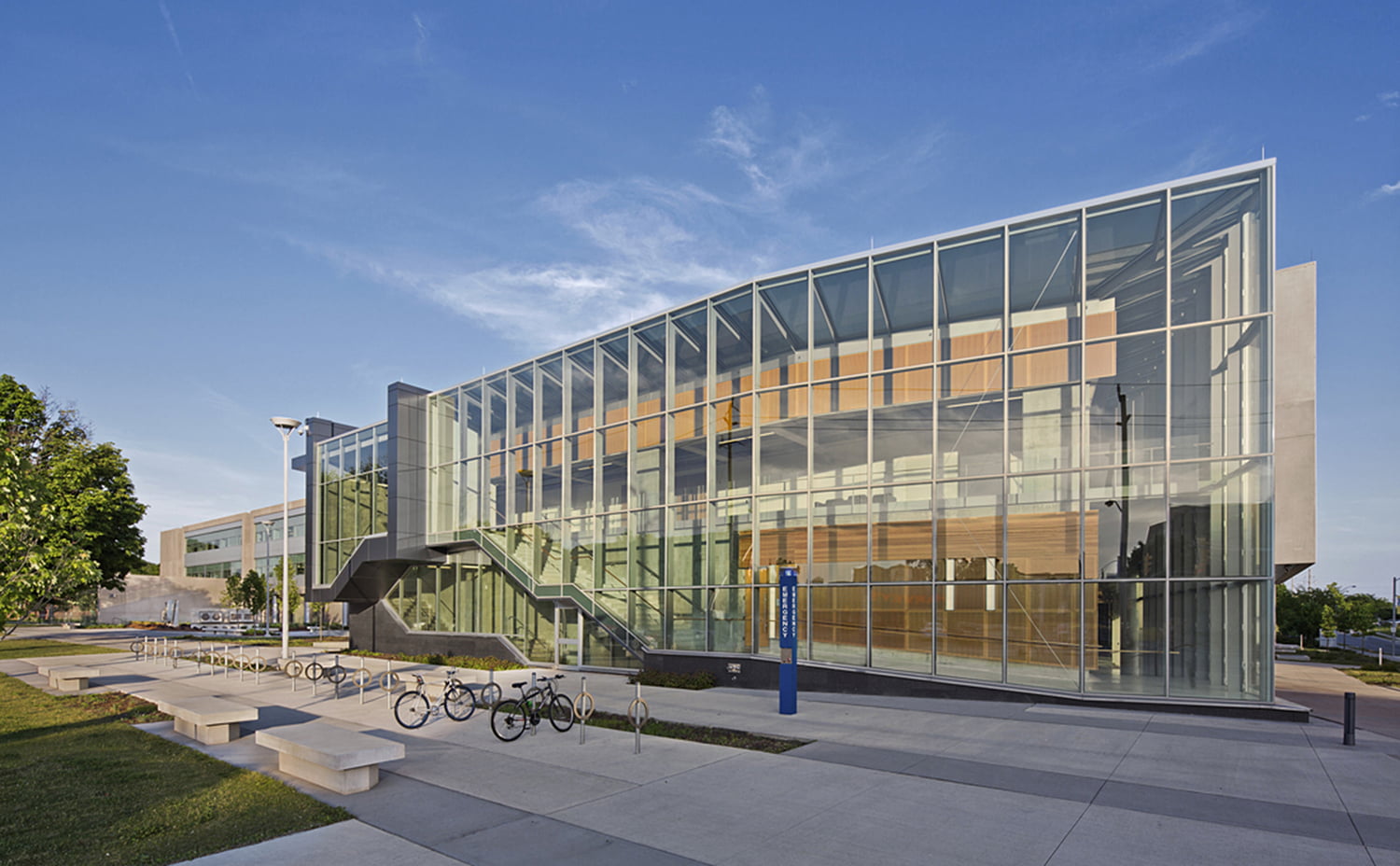
University of Windsor – Completed High Performance Project
From Reactive Buildings to Proactive Comfort
Conventional buildings react to temperature swings – leading to inefficiency, oversized systems, and uneven comfort.
Termobuild makes buildings proactive.
By storing energy in the structure, buildings deliver stable comfort while reducing system size, capital cost, and peak demand.
Universities • K-12 • Healthcare • Civic Buildings • Commercial • Residential
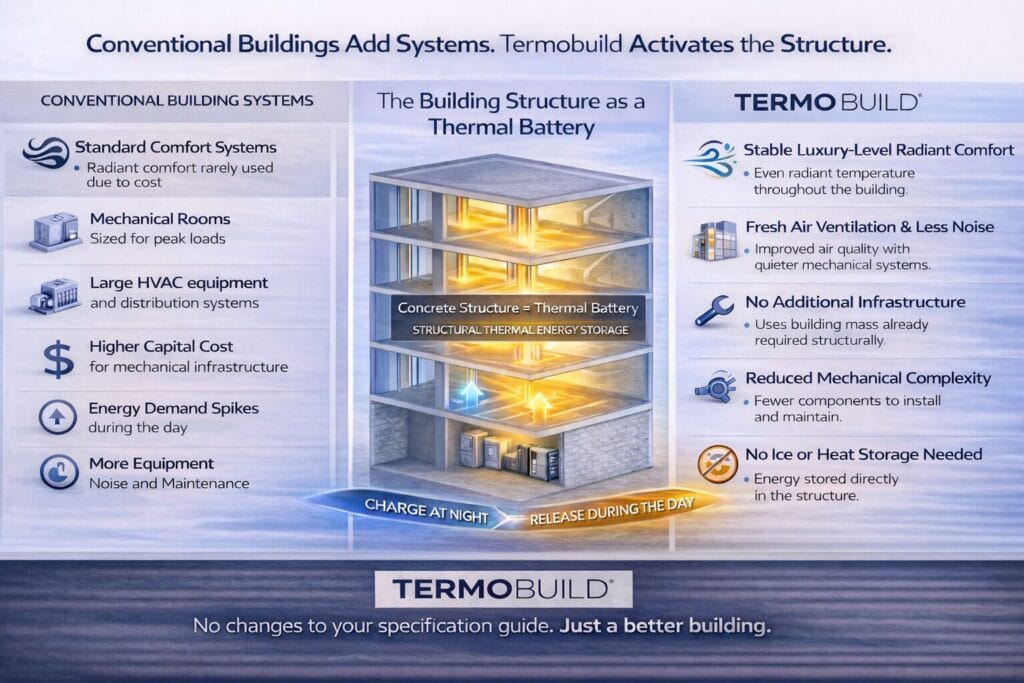
Conventional systems add complexity. Termobuild replaces it.
What This Looks Like in a Real Project
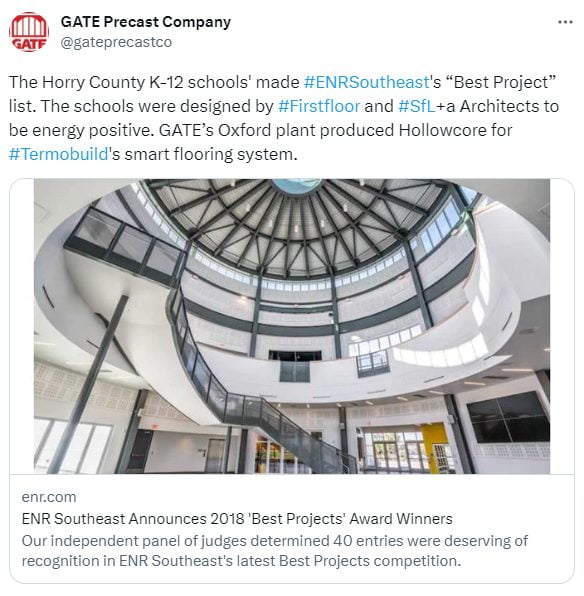
675,000 sq.ft K–12 Campus
Deployed across 5 schools using structural thermal energy storage
• ~10% reduction in mechanical capital cost
• 38% reduction in maintenance costs
• EUI reduced to 14–21 (vs ~150 typical)
• Stable radiant comfort throughout the building
Most Buildings Ignore the Energy Already Inside Them
Concrete structures already store large amounts of thermal energy - but most buildings don’t use it.
Conventional HVAC systems react to temperature swings, increasing system size and cost.
Termobuild activates the structure to store and release energy – changing how the building handles heating and cooling load.
Watch: How Buildings Store Energy in Their Concrete Floors:
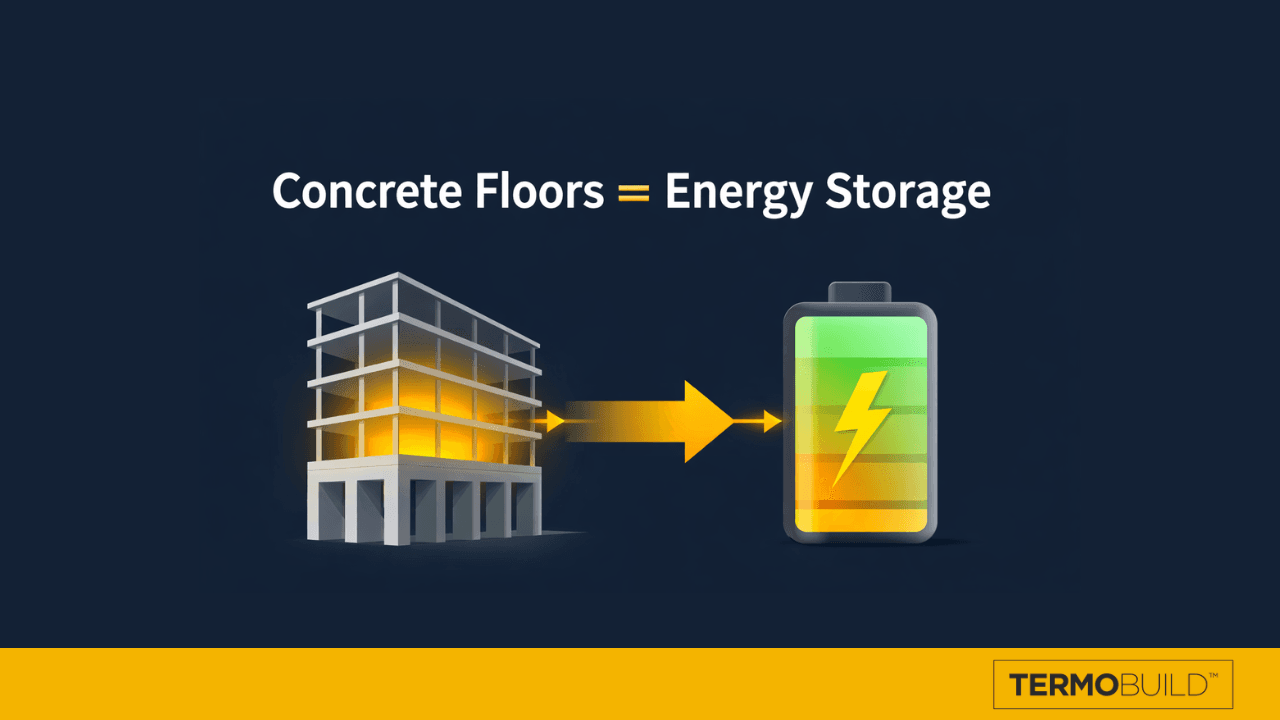
Conventional buildings react to temperature swings.
Termobuild makes buildings proactive.
What changes in the system:
Heating and cooling loads shift into the structure instead of being handled entirely by mechanical systems.
This allows HVAC systems to be designed smaller and operate more efficiently without relying on oversized peak-load equipment.

Completed High Performance K-12 Project
Why Structural Thermal Storage Changes Building Economics
Through integrated HVAC and rechargeable floor design, concrete floors and ceilings become thermal energy storage systems – delivering:
- Reduced or reallocated capital cost (often cost-neutral to lower total cost)
- Up to 75% lower daytime HVAC energy demand
- Long-term operating savings
- No changes to your specification guide
Termobuild replaces a portion of the mechanical system – it is not an added layer of cost.
What This Means For Your Project
- Lower capital cost and operating cost
- Smaller, simpler mechanical systems
- More consistent indoor conditions
- A building that performs reliably over time
Proven Performance
• Canada’s two most efficient schools
• 678,000 sq ft net-positive development in South Carolina
• 18+ years operational performance
Why this approach is gaining adoption
Structural thermal storage lets buildings store energy when it is cheapest and deliver comfort when it is needed.
Structural thermal storage is gaining adoption as projects look to reduce mechanical system complexity, control peak demand, and improve long-term building performance.
With over 18 years of experience in education, healthcare, commercial, residential, and civic buildings. These projects demonstrate how activating the building structure can deliver superior comfort while reducing capital costs and energy demand.
Where Termobuild Works Best
- Universities and campuses
- Hospitals and healthcare
- Commercial buildings
- Luxury residential
- High-performance buildings
- Energy-constrained developments
Termobuild works with project teams early in design to deliver better buildings at lower cost.
By activating the structure as thermal energy storage, buildings shift from reactive HVAC control to proactive thermal stability - reducing cost, improving performance, and increasing long-term value.How We Work With Project Teams
We engage early in design to evaluate system-level impact.
-
Project Evaluation
The first step is a review of your new building design or retrofit project. We start with mechanical design brief and architectural plans - to determine if our integration is a strong fit.
-
Cost-Benefit Analysis
Next, we conduct a cost and performance analysis so your team can evaluate the financial and operational impact before designs are finalized.
-
Mechanical Strategy
Finally, our engineering team works closely with your project team from planning through construction to seamlessly integrate the system into your architectural design and mechanical strategy.
What does Termobuild cost?
Termobuild is not a standalone system added to a conventional design.
It replaces a portion of the mechanical system by using the structure itself to store and deliver energy.
As a result, cost is evaluated at the building system level - typically ranging from cost-neutral to a reduction in total project cost depending on building type and design.
Backed by a globally insured guarantee
Structural thermal storage stores energy when it is cheapest while delivering luxury-level radiant comfort and fresh air ventilation throughout the building.
See how this impacts your project cost and mechanical system design
Both new construction and retrofit projects may benefit from structural structural thermal energy storage.
We’ll review your building design to determin how Termobuild can impact it’s cost and performance..
Partners and Publications